
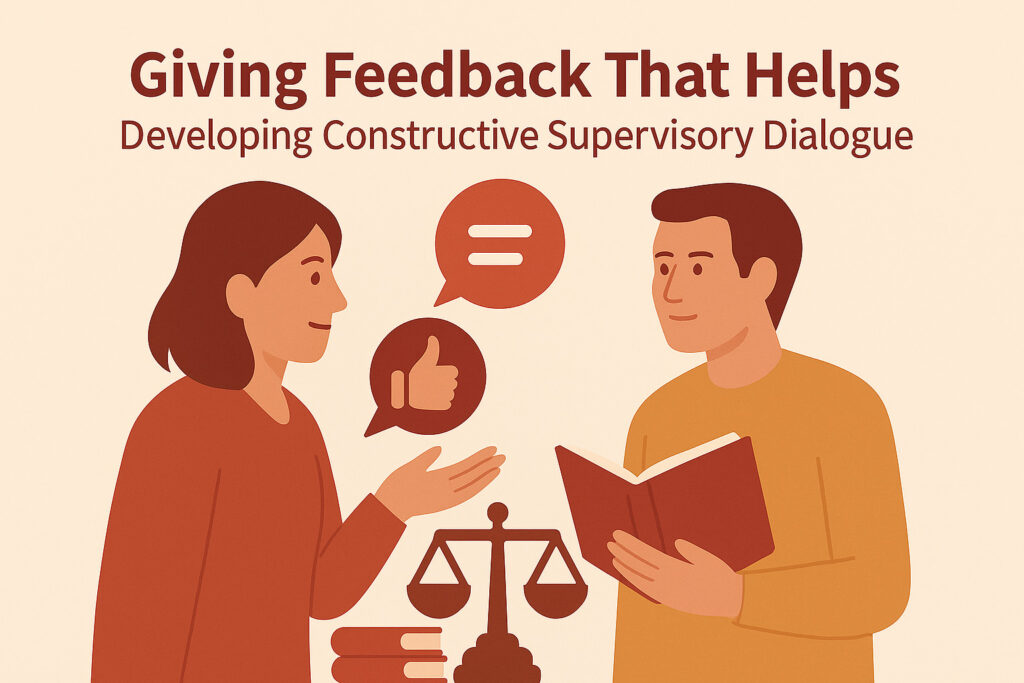
Among the many roles a supervisor plays, offering feedback is perhaps the most visible — and the most vulnerable. It is where we engage directly with a student’s ideas, writing, and progress. And it is where our words can either build momentum or stall it.
Feedback is not simply a technical exchange; it is a pedagogical act. It communicates expectations, sets a tone, and shapes the student’s confidence. Done well, it offers both critique and direction. Done poorly, it can confuse, alienate, or demotivate. For this reason, developing a thoughtful feedback practice is central to effective supervision.
Constructive feedback begins with clarity — both in what we expect and how we respond. It helps to distinguish between different types of feedback: structural, conceptual, stylistic, or procedural. A chapter draft may be strong in terms of argument but weak in structure; or rich in evidence but unclear in focus. Being specific about what needs work — and why — makes the feedback actionable rather than overwhelming.
Timing also matters. Feedback that arrives too late can delay progress, while feedback given too early — before ideas are fully formed — can inhibit creativity. Establishing shared expectations around timelines, formats, and depth of feedback can help manage misunderstandings and reduce anxiety.
Tone is equally important. Many of us have encountered feedback that was technically accurate but emotionally deflating. This is not about sugar-coating critique, but about being mindful of the power imbalance between student and supervisor. We can be rigorous without being harsh; critical without being dismissive. Framing feedback as a dialogue — rather than a verdict — helps maintain a collaborative relationship.
Importantly, feedback should also acknowledge what is working. Positive reinforcement is not empty praise — it is guidance. When students know what they are doing well, they are more likely to repeat it. Highlighting strengths reinforces good habits and builds a sense of capability.
“Feedback is not simply a technical exchange; it is a pedagogical act.”
For supervisors working with international students or those from different disciplinary traditions, feedback must also be culturally aware. Academic conventions are not universal, and assumptions about clarity, argumentation, or tone may differ. In such cases, feedback may need to include explicit guidance on norms and expectations that others take for granted.
Finally, feedback is a reciprocal process. Inviting students to reflect on their own drafts, to ask questions, and to articulate their understanding of our comments, can deepen learning and reduce misinterpretation. It also signals that supervision is a shared endeavour — not a one-way transmission.
More on supervision today!