
Doctoral Leadership

Supporting strategic, inclusive, and globally aware supervision cultures across institutions

Professor and doctoral student walking together on a British university campus

Doctoral supervision is no longer a private or informal academic endeavour — it has become a strategically significant practice with far-reaching implications for institutional culture, research excellence, and postgraduate researcher success. In today’s context of heightened accountability, expanding international collaboration, and ongoing transformation across the higher education sector, supervision must be understood not only as a personal academic duty but as a core institutional commitment.

At TEDS, we support supervisors, doctoral schools, and university leaders in cultivating supervision cultures that are reflexive, inclusive, and ethically grounded. Our approach recognises that effective supervision is central to both individual researcher development and broader institutional goals. This section of the site offers guidance on embedding high-quality supervisory practice at every level — from individual capabilities and developmental pathways to strategic alignment with frameworks such as the REF, TEF, and key global initiatives.
 

Supervisor Strategy

Embedding supervision into institutional priorities

Strong doctoral supervision is a cornerstone of a healthy research environment. Yet in many institutions, it remains undervalued, inconsistently supported, or disconnected from strategic frameworks.

We support institutions to:

  • Align supervisory development with REF and TEF preparation
  • Embed UKCGE-recognised practices within academic development frameworks
  • Design and implement supervision strategies for new or growing doctoral programmes
  • Address workload modelling, role recognition, and peer learning structures

By approaching supervision strategically, universities strengthen not only student outcomes, but also academic leadership, research culture, and cross-departmental coherence.

“We often talk about excellence in research — but without robust, reflective supervision, that excellence falters. Institutions need structures that support supervisors to thrive, not just survive.”

Dissemination & Impact

Supervision beyond the thesis

Doctoral supervisors play a vital role in shaping how students think about, share, and apply their research. This includes:

  • Supporting candidates with publication, presentation, and public engagement
  • Embedding impact planning into supervision practices
  • Facilitating ethical dissemination and authorship guidance
  • Encouraging students to articulate the wider value of their research
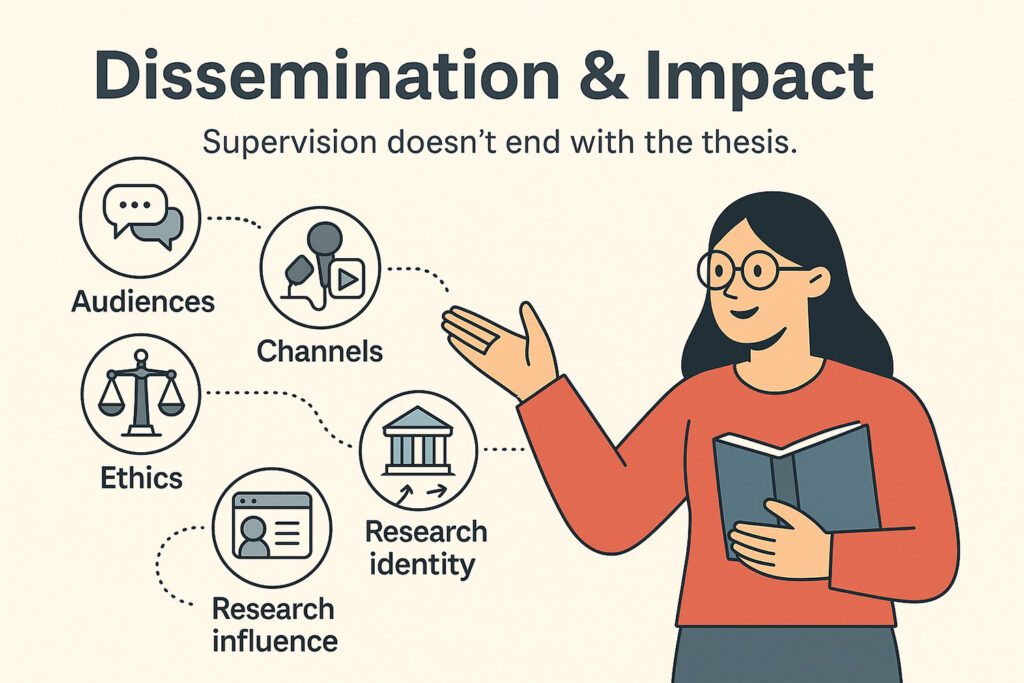
Flat-style illustration of a female academic explaining dissemination and impact concepts using icons for audiences, channels, ethics, research identity, and influence

Through international capacity-building projects — from Pakistan to Ghana — we’ve helped institutions reimagine their supervisory role in shaping societal, cultural, and policy impact.

Read More

Doctoral Pathways

Adapting supervision to diverse doctoral models

Doctoral education is not one-size-fits-all. Whether supervising a traditional PhD candidate, a mid-career professional undertaking a DBA, or an interdisciplinary team-based project, supervisors must adapt their approach to suit the context.

We help you ask: What does effective supervision look like across different doctoral routes? And more importantly: How can institutions ensure consistent quality across them all?

Read More

We support supervisors and institutions to:

  • Navigate the specific needs of professional doctorate candidates
  • Understand how pathways influence supervision style, structure, and assessment
  • Build frameworks that respect academic rigour while embracing practice-based knowledge
  • Facilitate reflection on power dynamics, especially where candidates bring sectoral expertise

Inclusive & Ethical Practice

Supervising with integrity, equity, and awareness

Strategic doctoral leadership is inseparable from ethical responsibility. Supervisors are often the first point of contact for students navigating challenges around identity, wellbeing, access, and belonging. Institutions must equip them not only with technical knowledge, but with ethical awareness and confidence.

This includes

  • Supporting neurodivergent and disabled students
  • Navigating co-supervision across cultures, time zones, and hierarchies
  • Managing boundaries, professional conduct, and difficult conversations
  • Embedding decolonial, anti-racist, and inclusive frameworks into supervisory practice

We believe that inclusive supervision is not a niche concern — it is central to doctoral success. Institutions that invest in ethical supervision build trust, reduce attrition, and foster a more just research environment.

Read more