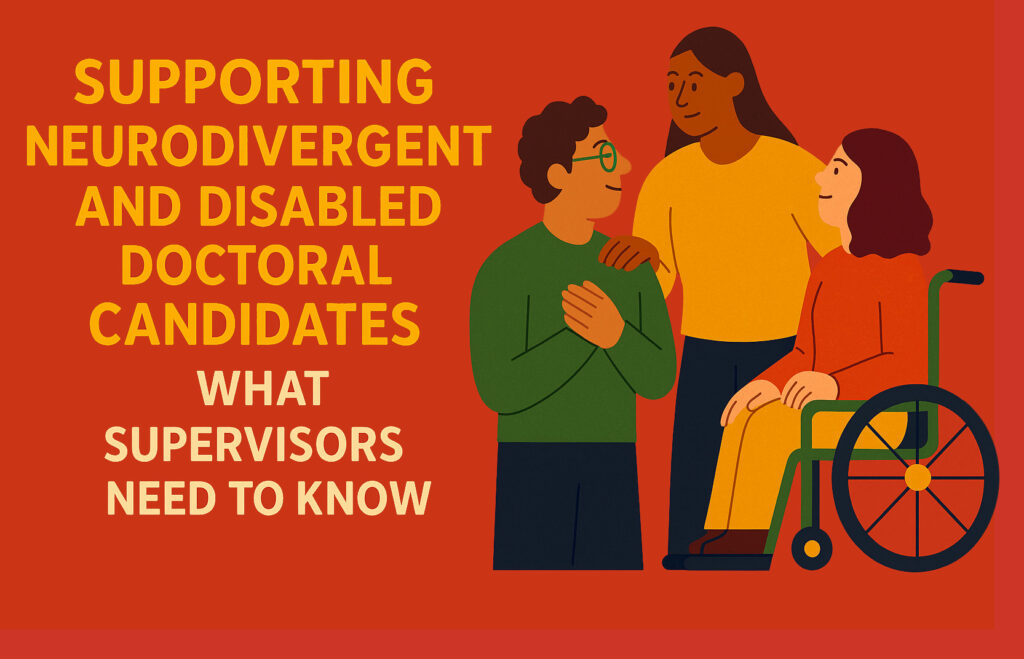
Doctoral education is becoming more inclusive, and rightly so. Students identifying as disabled, neurodivergent, or living with chronic conditions are part of our doctoral communities — contributing intellectually, reshaping practices, and challenging assumptions about what research and learning can look like. As supervisors, we have a responsibility to support all students equitably, which means understanding how to create environments in which neurodivergent and disabled candidates can thrive.
This begins with awareness. Not all disabilities are visible, and not all students will disclose. Supervisors should therefore aim to create a default culture of flexibility, clarity, and openness — one in which students feel safe to talk about their needs, whether formally diagnosed or not. When a student does disclose a condition or request support, it is not our role to assess legitimacy or manage medical detail. It is our role to listen, to ask how we can best support their learning, and to help them access institutional support services as needed.
Some students may benefit from adjustments to the way supervision is structured. This might include shorter or more frequent meetings, the option for written rather than verbal feedback, clear agendas, or additional time for reading and writing tasks. Others may need flexibility in deadlines, physical access to facilities, or assistive technology. What matters is that these adjustments are treated not as burdens but as part of the normal work of inclusive education.
Inclusive supervision also requires attention to communication. Students with conditions such as ADHD, autism, or mental health diagnoses may process information differently or experience meetings differently. Being mindful of sensory load, social cues, or processing speed can make a big difference. So can checking in periodically about what’s working and what’s not — and being willing to adapt without judgment.
“Supporting disabled and neurodivergent students is not an extra task — it is a fundamental part of being an ethical and effective supervisor.”
Training helps here. Most supervisors want to support students well, but may feel unsure what is appropriate or how to ask. A little guidance can go a long way in building confidence, dismantling stigma, and creating supervisory relationships that are respectful and responsive. This, in turn, supports student success and fosters a culture in which diversity is seen as an asset, not a complication.
Ultimately, supervision is not about treating all students the same. It is about treating each student with the care and flexibility they need to succeed. Supporting disabled and neurodivergent students is not an extra task — it is a fundamental part of being an ethical and effective supervisor.
Join a Peer Mentoring Session