

Inclusive & Ethical Practice

Good supervision is not only effective — it is ethical, inclusive, and reflective of the diverse realities our doctoral researchers inhabit. This section brings together insights on how supervisors can foster equitable relationships, recognise structural inequalities, and adapt their practice to support all students — especially those navigating academic spaces from the margins.

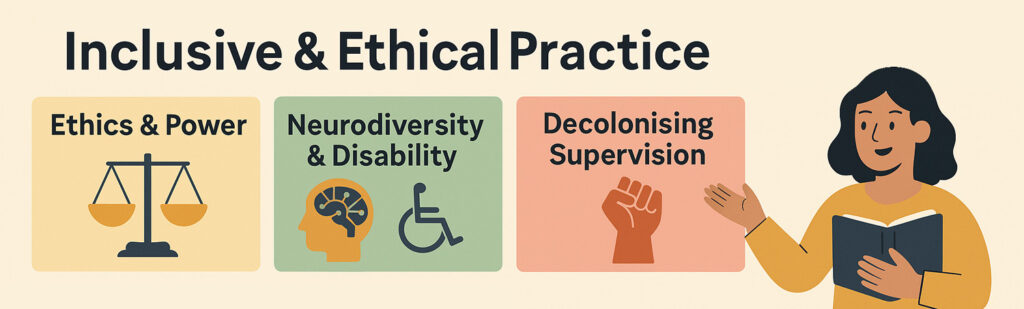
Flat-style illustration showing ethics, neurodiversity, and decolonising supervision as components of inclusive and ethical doctoral practice
Flat-style illustration showing three diverse academic figures in conversation with a justice scale above them, symbolising ethical supervision, power balance, and professionalism in doctoral education.

Ethics & Power

Supervising Ethically — Boundaries, Power, and Professional Conduct

Read Article
Flat-style illustration of a supervisor supporting two diverse doctoral candidates, one using a wheelchair, with warm red, green, and yellow tones symbolising inclusion, empathy, and accessibility in academic supervision.

Neurodiversity & Disability

Supporting Neurodivergent and Disabled Doctoral Candidates — What Supervisors Need to Know

Read Article

Flat-style illustration of two people in dialogue with a scale of justice and books between them, symbolising equity, power balance, and knowledge-sharing in doctoral supervision.

Decolonising Supervision

Decolonising Doctoral Supervision — Rethinking Power, Knowledge, and the Supervisor–PGR Relationship

Read Article
Flat-style illustration of a community-based academic workshop with four people sitting around a symbolic red tree, inspired by Rispel’s decolonial supervision model.

Reimagining Supervision Through Community: A Reflection on Rispel’s Decolonial Workshops

Read Article


Make Supervision More Inclusive

Want to build inclusive supervision into your programme?

Book a Workshop Talk to Our Team